Did Bumble's founder get rich? Whitney Wolfe Herd's $1.5B stake vs ~$70M in cash

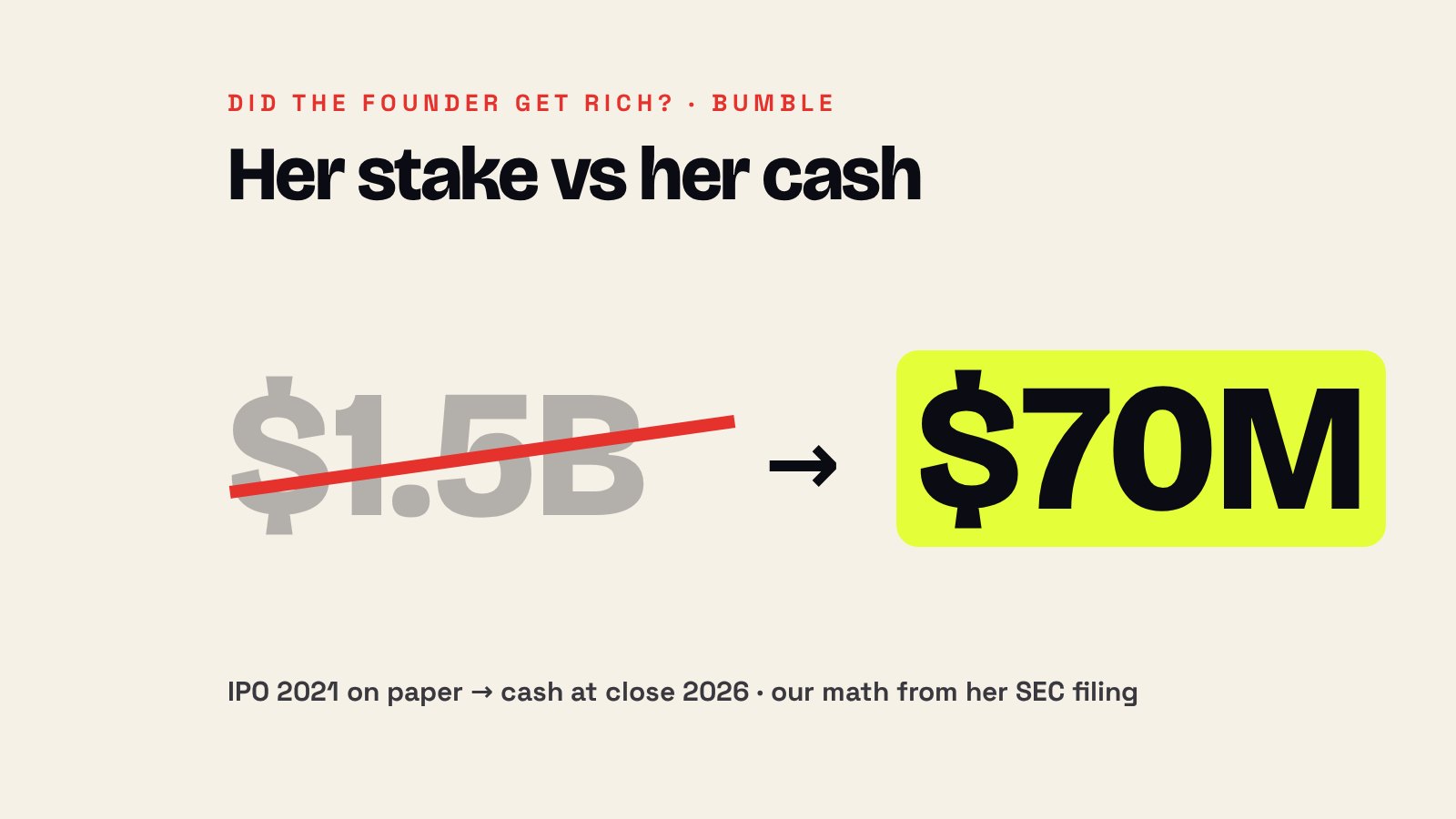
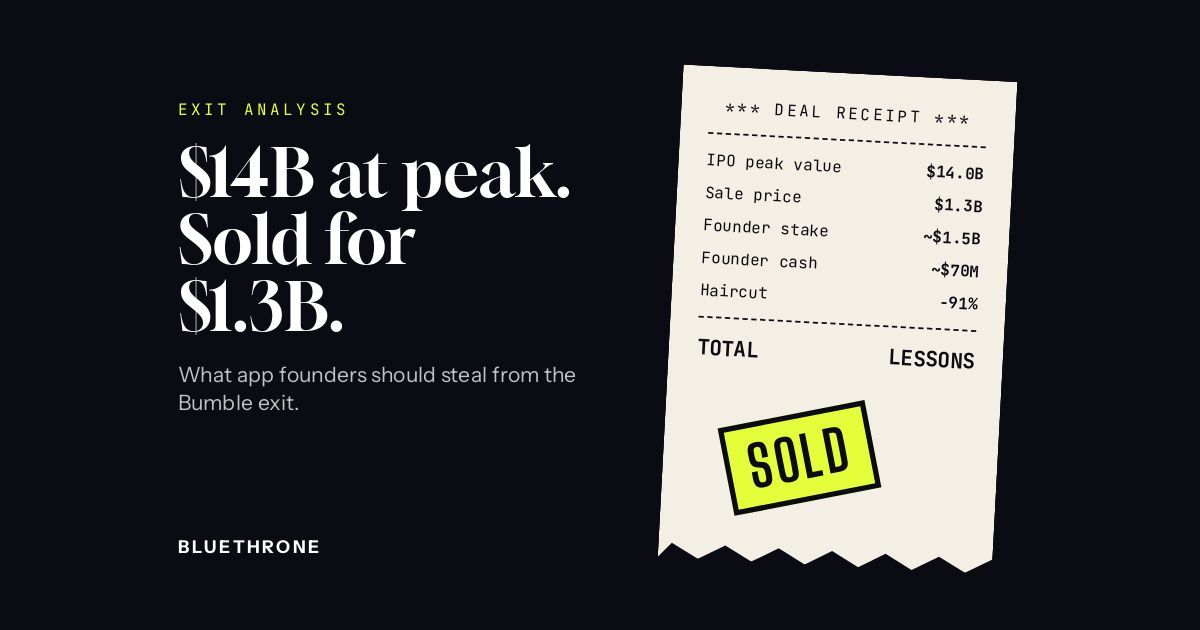
Short answer: Did Bumble's founder get rich? Yes, life-changing rich, in cash. Ithaca Holdings is buying Bumble for $1.3 billion, all cash, $6.05 a share (Bumble press release, SEC). Whitney Wolfe Herd's SEC filing shows about 22.6 million Class A shares, of which at least 10.9 million roll into the buyer's new parent company (her SEC filing). By our math that is about $70 million in cash at close and about $66 million still on paper, 12 years after she launched the app. At the 2021 IPO her stake was worth about $1.5 billion (Fox Business). She rode it down about 90%.
$1.3 billion is the number in every headline. The number that matters to a founder is the one that lands in her bank account. For Whitney Wolfe Herd, that number is about $70 million. Here is how a ~$1.5 billion stake became that, step by step, with sources.
The 30-second version
Did Bumble's founder get rich? Yes, life-changing rich, in cash. Ithaca Holdings is buying Bumble for $1.3 billion, all cash, $6.05 a share (Bumble press release, SEC). Whitney Wolfe Herd's SEC filing shows about 22.6 million Class A shares, of which at least 10.9 million roll into the buyer's new parent company (her SEC filing). By our math that is about $70 million in cash at close and about $66 million still on paper, 12 years after she launched the app. At the 2021 IPO her stake was worth about $1.5 billion (Fox Business). She rode it down about 90%.
Headline price: $1.3B, all cash, $6.05 per share (October 2026).
Founder stake: about 20% at founding in 2014, Badoo's Andrey Andreev held the majority (Forbes, 2019). Today about 22.6M Class A shares, 14.7% of the class (her SEC filing).
Cash at close vs stock: about $70M cash, about $66M rolled into the buyer's parent (our math: shares not rolled x $6.05, and at least 10.9M rolled x $6.05).
Years it took: about 12 (December 2014 to October 2026).
Verdict: LIFE-CHANGING. But a ~$1.5B paper stake at the IPO ended as ~$137M, half of it still on paper.
The timeline of her stake
| Year | What happened | What it meant for the founder |
|---|---|---|
| 2014 | Leaves Tinder; her lawsuit settles, reportedly for just over $1M, with no admission of wrongdoing (Business Insider). | Starts over with a settlement, not an exit. |
| 2014 | Launches Bumble with Badoo's Andrey Andreev, who funded it and kept the majority (Forbes). | About 20% and the CEO title, not control. |
| 2019 | Blackstone takes a majority stake in MagicLab, Bumble's parent, at about a $3B valuation; Andreev sells out; she becomes group CEO (Blackstone). | A new, bigger owner above her. |
| 2021 | IPO at $43 a share (Bumble IR), around a $14B valuation (Semafor). | Billionaire on paper, stake ~$1.5B. |
| 2026 | Ithaca buys Bumble at $6.05 a share, all cash, after paying users fell 16.4% and revenue 15.2% in a year (TechCrunch). | ~$70M cash, ~$66M rolled (our math). |
In her own words
That was the moment Blackstone bought control at $3 billion. We haven't found an interview where she talks about her own payout from the 2026 deal, so we won't put words in her mouth.
Why the headline and her cash are so far apart
What happened: she never owned the majority. Badoo funded Bumble and kept control, then Blackstone did.
Lesson: your percentage at founding is the ceiling of your outcome. Every round and every new owner only shrinks it.
What happened: the stake peaked on paper at the IPO and fell with the stock for five years.
Lesson: nobody sees the peak. A public CEO can't sell big without the market reading it as panic. A private app owner can take money off the table quietly, on the way up.
What happened: at least 10.9M of her shares roll into the buyer's parent instead of turning into cash.
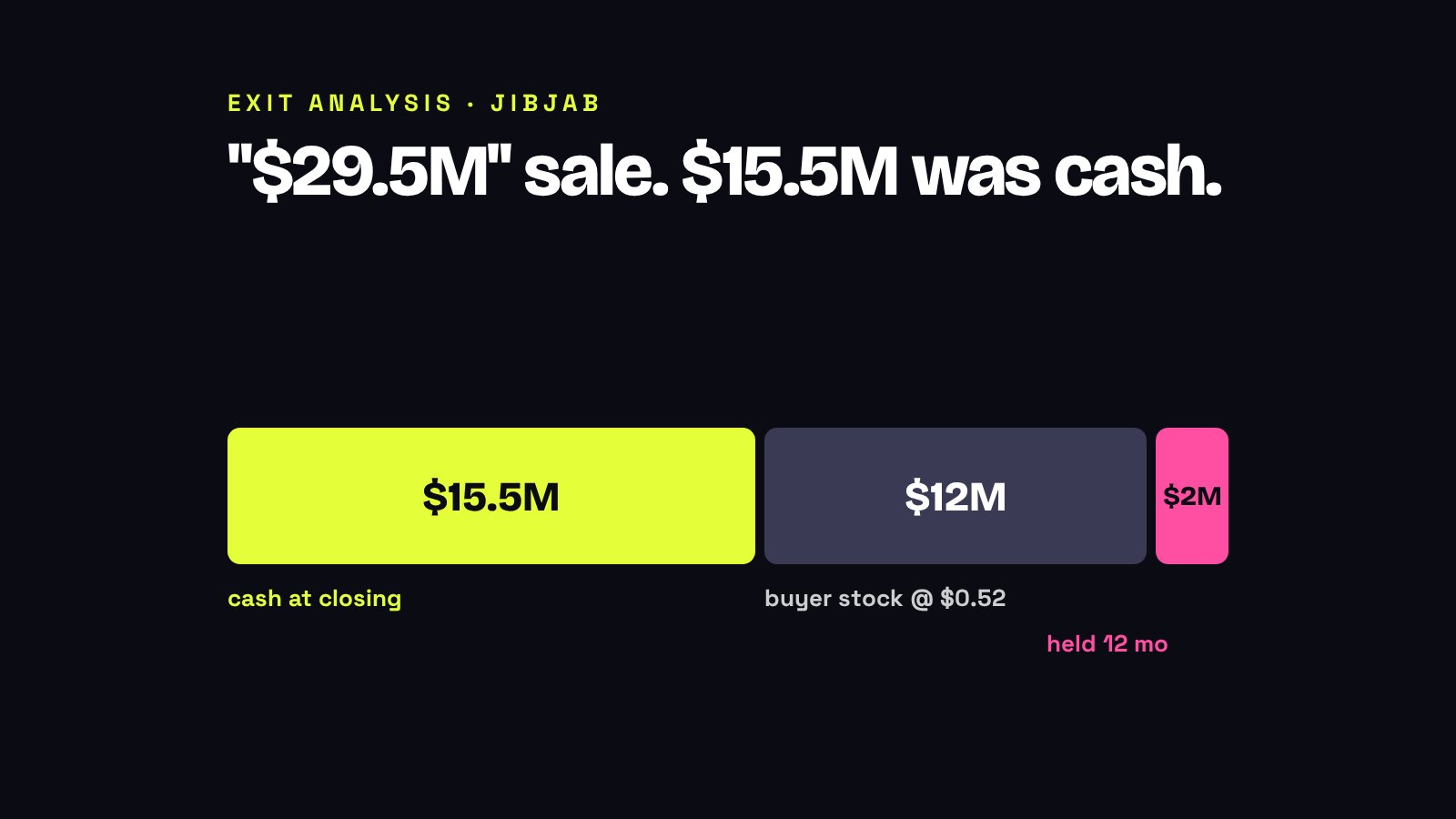
Lesson: rolled equity is a second bet on the same company. Count it at zero until it pays. We saw the same gap at JibJab, where "up to $29.5M" was $15.5M in cash (our JibJab breakdown).
What we'd tell a founder in her shoes
We buy apps, so we see this from across the table every week. When we make an offer, the first number we put in front of the founder is cash at close. Everything else, earn-outs, rolled equity, holdbacks, is a promise. If you run a private app with a line that still goes up, you have something Wolfe Herd didn't: the freedom to sell part of it without anyone watching. Get a real number while the trend is on your side. Check what your app is worth, or read how to sell your app to a company. For the full company story, see our Bumble exit analysis.
FAQ
Did Bumble's founder get rich from the sale?
Yes. By our math from her SEC filing, Whitney Wolfe Herd gets about $70 million in cash at close from the $1.3 billion Ithaca deal, plus about $66 million in shares rolled into the buyer's parent company.
How much was Whitney Wolfe Herd's Bumble stake worth at the IPO?
About $1.5 billion on paper, when Bumble went public in February 2021 at $43 a share.
How much of Bumble did Whitney Wolfe Herd own at the start?
About 20%. Badoo founder Andrey Andreev funded the company and held the majority, according to Forbes (2019).
Why is she rolling over shares instead of taking all cash?
Her filing shows at least 10.9 million of her roughly 22.6 million Class A shares roll into the new parent company. Rolled equity keeps her invested in Bumble under its new owner.
How long did it take from founding to exit?
About 12 years, from Bumble's launch in December 2014 to the October 2026 sale.
Written by Idan Waller, co-founder of BlueThrone. Part of our series "Did the founder get rich?": we judge every exit by one question, how much the founder took home in cash.


Keep reading







Time for
your exit?