Google Play foldable rules (April 2027): can your Android app still update?

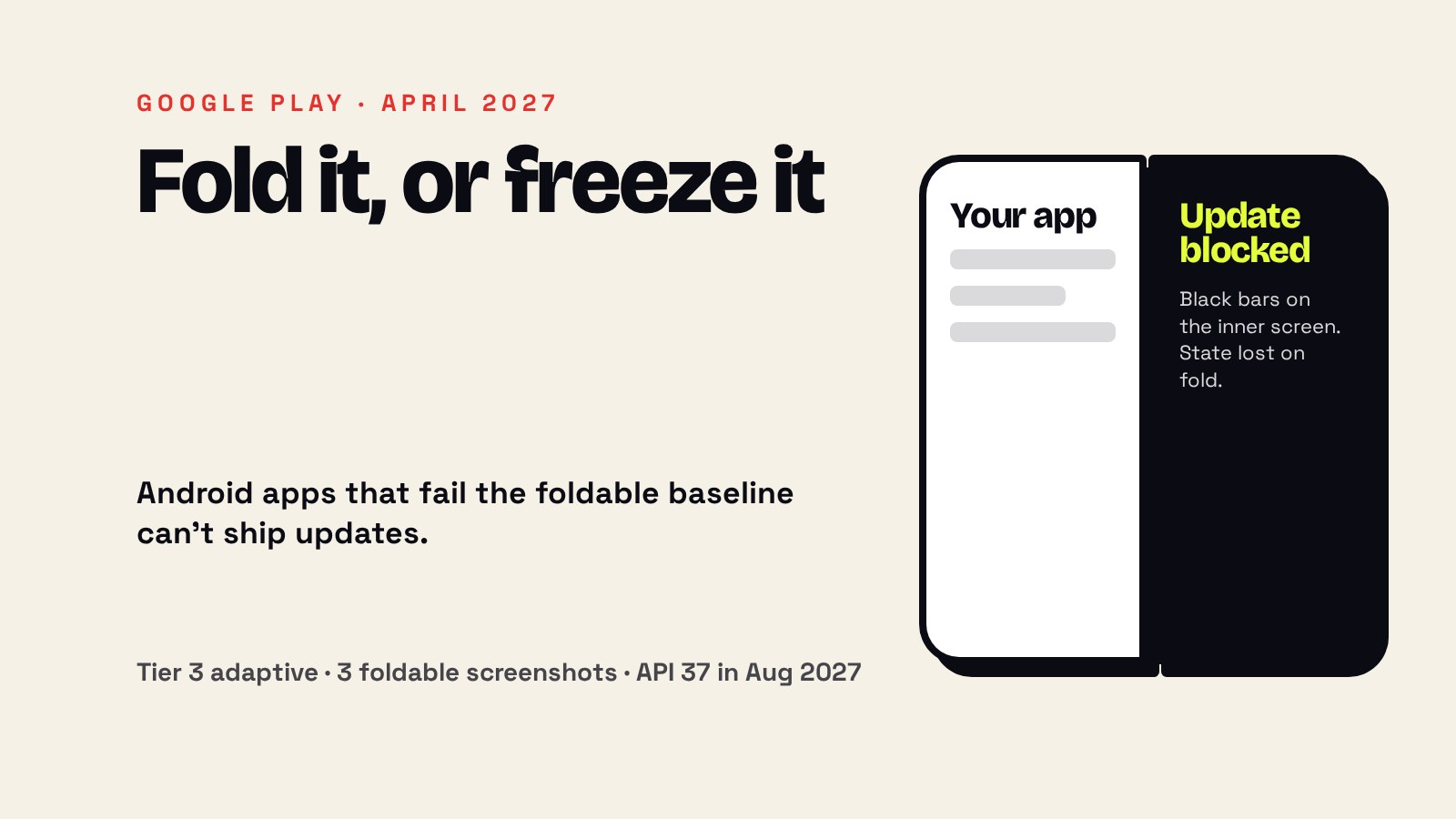
Short answer: On November 18, 2026, Google Play announced that from April 2027, every new app and every app update must meet the baseline "Tier 3: Adaptive ready" standard for foldables: fill the whole screen with no letterboxing, keep scroll position, text input and playback when the phone folds, unfolds or rotates, and work in multi-window. Apps that don't meet it can't publish or update and may lose visibility. Every listing will also need 3 foldable screenshots on top of the 2 phone screenshots. Existing apps that you never update stay downloadable. In August 2027, new apps and updates must also target API level 37 (Android 17). (Google Play)
Your Android app won't disappear in April 2027. It will just freeze. No bug fix, no new paywall test, no SDK update, until it works on a phone that folds in half. And if you're planning to sell, a frozen app is the first thing a buyer will price in.
The 30-second version
On November 18, 2026, Google Play announced that from April 2027, every new app and every app update must meet the baseline "Tier 3: Adaptive ready" standard for foldables: fill the whole screen with no letterboxing, keep scroll position, text input and playback when the phone folds, unfolds or rotates, and work in multi-window. Apps that don't meet it can't publish or update and may lose visibility. Every listing will also need 3 foldable screenshots on top of the 2 phone screenshots. Existing apps that you never update stay downloadable. In August 2027, new apps and updates must also target API level 37 (Android 17). (Google Play)
What exactly Google is asking for
From Google's announcement and the Tier 3 guideline:
- Fill the screen: no letterboxing (black bars) and no compatibility mode when the app opens on a foldable's inner screen.
- Keep the state: scroll position, text the user typed and media playback must survive rotation, folding, unfolding and resizing.
- Multi-window: the app must work when it shares the screen with another app.
- Screenshots: 3 foldable screenshots (for example a 1:1 unfolded inner screen, a 4:3 unfolded screen and a 10:16 folded outer screen), required at submission from April 2027. You can upload them in Play Console today under Grow > Store presence > Store listings, and screenshots from the Android Emulator count.
Games get their own timeline: foldable screenshots by April 2027, and the Tier 3 large-screen rules from August 2027 (Google Play).
What founders are saying
The first reactions on developer forums focus on the screenshots: one Android developer called the screenshot rule "too vexatious" (r/androiddev). We get it, but that's the easy part, because emulator screenshots are accepted. The real cost is the code: a phone-only app that has locked portrait mode for years now has to handle a square screen, multi-window and folding without losing the user's place. We haven't found a founder on the record with a cost estimate yet, so we won't invent one.
Why this matters more than it looks
Read the fine print: "Existing un-updated apps will remain downloadable." So nothing breaks on day one. That's the trap. The app keeps earning, and the founder thinks they're fine, until the day they need to ship something: a crash fix after an Android update, a price test, a new SDK version, a payments change. From April 2027, every one of those is blocked until the app passes Tier 3.
An app that can't be updated is an app whose revenue only goes one way. Store algorithms reward fresh apps, Android keeps changing underneath you, and in August 2027 the API 37 requirement removes the opt-outs that let apps force portrait mode on big screens (Android Developers).
The buyer's side of the table
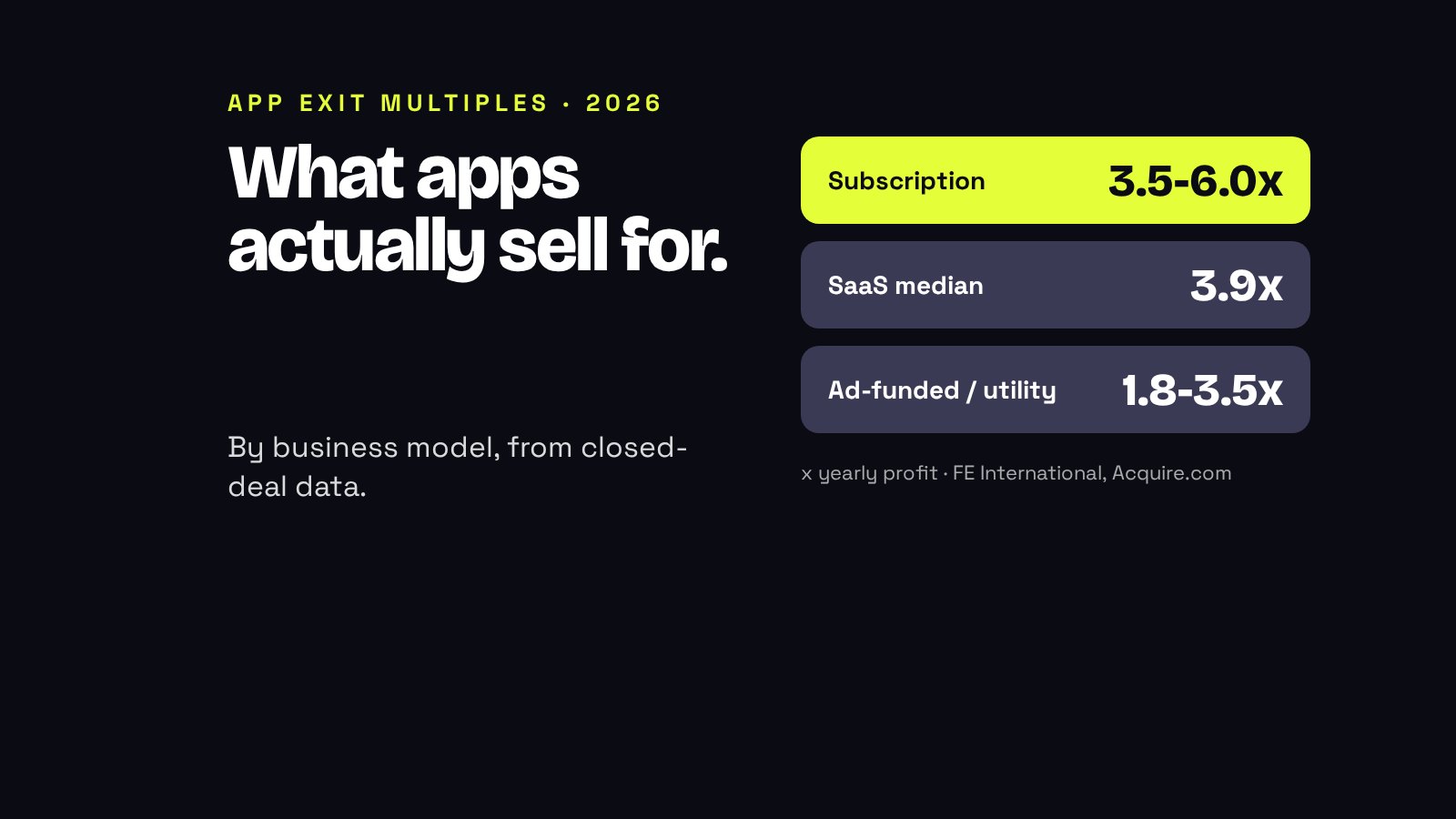
When we look at an Android app to buy, one of the first questions is now simple: can this app ship an update after April 2027? If the answer is "not without work", that work comes off the price. A buyer doesn't pay you for revenue they can't protect. It's the same logic as the multiples in our app exit multiples guide: anything that adds risk to future revenue lowers the multiple, and a hidden rebuild is risk.
The good news for founders: if you fix it before you sell, it stops being a discount and becomes a line in your favor. "Tier 3 ready, foldable screenshots live" is a clean answer in due diligence, and most of the apps a buyer compares you with won't have it yet.
What it means for you, founder by founder
What changes: from April 2027 your next release is blocked until the app passes Tier 3.
Should you act? yes, put it on the roadmap for Q1 2027 at the latest, not March 31.
What I'd do: test the app this week on the 1:1 and 4:3 foldable emulators: open it, type something, fold, unfold, rotate. Whatever breaks is your to-do list.
What changes: this is the app that will feel it most: Tier 3 now, and in August 2027 API 37 removes the orientation opt-outs on large screens.
Should you act? yes, this is real development work, not a settings change.
What I'd do: get an estimate from your developer now, while you can still spread it over months.
What changes: foldable screenshots by April 2027, Tier 3 large-screen rules from August 2027.
Should you act? yes, but you have four extra months for the code.
What I'd do: upload foldable screenshots early: Google says apps that go beyond the baseline can apply for badging and enhanced merchandising.
What changes: buyers will ask "is it Tier 3 ready?" and price the answer.
Should you act? yes: fixing it before the sale is cheaper than the discount you'd take for it.
What I'd do: fix it, upload the foldable screenshots, and bring a screen recording of the app folding and unfolding to the first buyer call. Then check where you stand on our valuation tool.
Your checklist
- Open the app on the foldable emulators (1:1 and 4:3 inner screens) and on a 16:9 phone in landscape.
- Look for black bars or a stretched compatibility mode. Both fail Tier 3.
- Type in a field, scroll a list, start a video, then fold, unfold and rotate. Nothing should reset.
- Open the app in split screen next to another app.
- Capture the foldable screenshots (Google's guide) and upload them in Play Console now, before you're forced to.
- Plan the API level 37 update for before August 2027.
- Selling? Write down the date the app passed, so it's a fact in due diligence, not a promise.
Also on Android this year: Android developer verification for Google Play apps. Thinking about selling? Read how to sell your app to a company.
FAQ
What is Google Play's new foldable requirement?
From April 2027, new apps and app updates on Google Play must meet Tier 3 ("Adaptive ready") of Android's adaptive app quality guidelines: fill the screen without letterboxing, keep state during rotation, folding and resizing, and support multi-window. Listings also need 3 foldable screenshots.
What happens if my app doesn't meet Tier 3?
It can't be published or updated on Google Play and may get reduced visibility on the store. Existing apps that are not updated remain downloadable.
When do games have to comply?
Games need foldable screenshots by April 2027, and Google's Tier 3 large-screen quality rules for games take effect in August 2027.
Can I use emulator screenshots for foldables?
Yes. Google says screenshots from the foldable Android Emulators (1:1 and 4:3 inner displays) fully meet the new Play Console screenshot requirements.
Does this affect my app's sale price?
It can. From April 2027 an Android app that fails Tier 3 can't ship updates, so a buyer will deduct the cost and risk of fixing it. An app that already passes removes that question from due diligence.
Written by Idan Waller, co-founder of BlueThrone. We buy and grow mobile apps, so we read every store rule change from the founder's side of the table.


Keep reading






Time for
your exit?