App Due Diligence Checklist: 40 Things Buyers Ask For

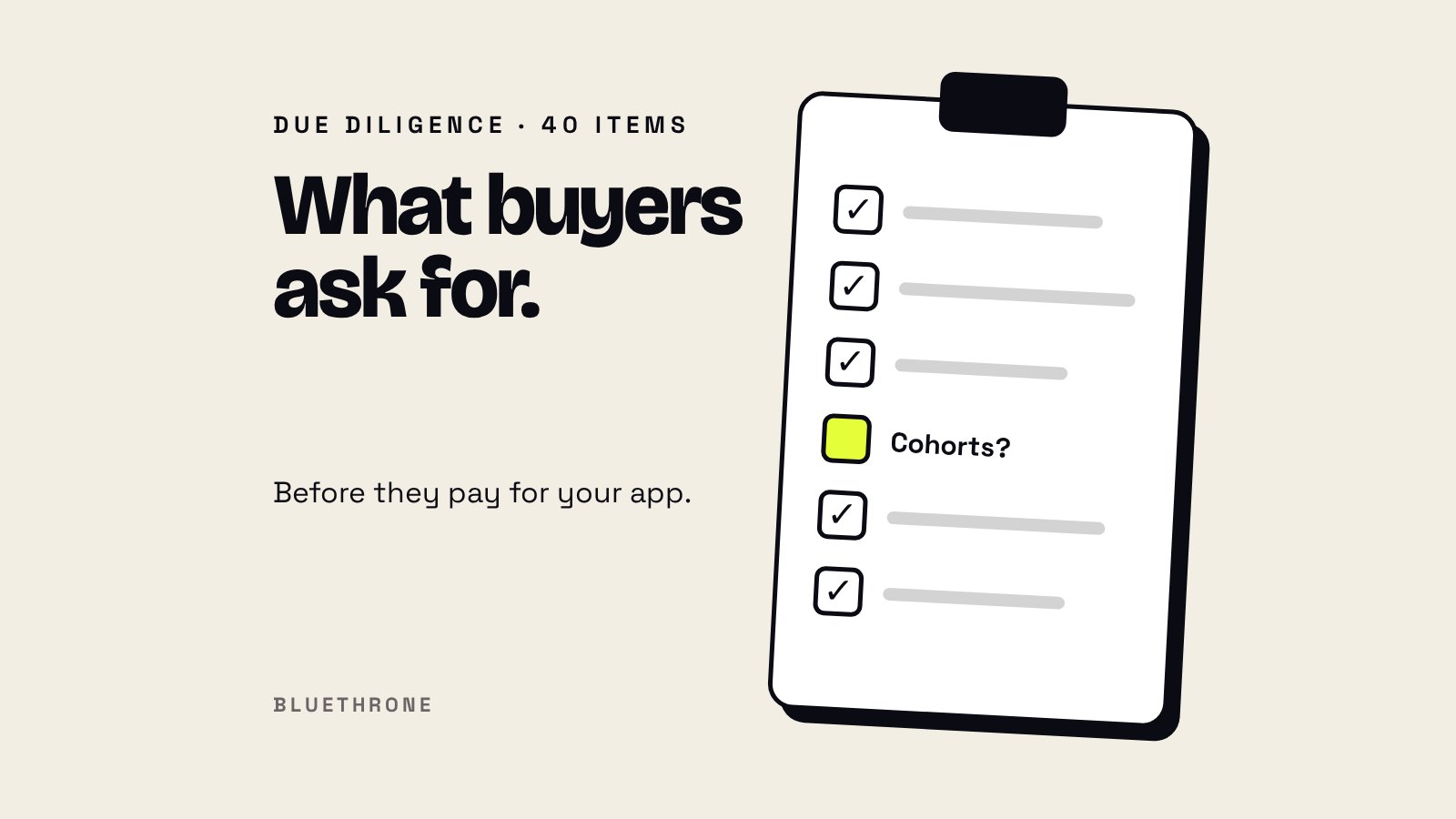
Short answer: App due diligence is the buyer checking that your numbers, users and ownership are real before they pay. Expect requests in six areas: money, revenue quality, users and traffic, product and tech, legal and IP, and the store transfer. Empire Flippers starts with a month-by-month P&L and needs at least 12 months of earnings history; FE International says buyers check the same things every time: retention by cohort, where installs come from, platform exposure, and whether the app runs without the founder. Prepare the 40 items below before you talk to a buyer, not after the offer.
A buyer does not pay for your app. They pay for what they can verify about it. Due diligence is where they check, line by line, and every missing item becomes a discount, a longer escrow or a dead deal.
The 30-second version
App due diligence is the buyer checking that your numbers, users and ownership are real before they pay. Expect requests in six areas: money, revenue quality, users and traffic, product and tech, legal and IP, and the store transfer. Empire Flippers starts with a month-by-month P&L and needs at least 12 months of earnings history; FE International says buyers check the same things every time: retention by cohort, where installs come from, platform exposure, and whether the app runs without the founder. Prepare the 40 items below before you talk to a buyer, not after the offer.
The founder side of due diligence
From the buyer's chair it looks simple: verify, then pay. From the founder's chair it is the most stressful month of the exit. You are still running the app, the buyer is asking for exports you have never made, and every slow answer reads like a hidden problem. The founders who get through it fast are the ones who built the data room before the first call. FE International puts it plainly: sellers who start six months early sell at the top of their band, and sellers who start at offer stage sell at the bottom.
1. Money: the numbers they will rebuild from scratch
- 1. A month-by-month P&L for at least the last 12 months: revenue, costs, net profit.
- 2. App Store and Google Play payout reports that match the P&L, month by month.
- 3. Bank statements that show those payouts actually landing.
- 4. Net revenue after store fees, refunds and chargebacks, not gross bookings.
- 5. Every add-back listed and explained (your salary, one-off costs, personal tools).
- 6. Ad spend by channel and month, with the invoices.
- 7. All recurring costs: servers, SDKs, tools, contractors, with contracts or receipts.
- 8. Taxes paid and anything owed, so no surprise liability follows the app.
2. Revenue quality: will the money still be there in three years?
- 9. Subscription cohorts: renewal rates by start month, monthly vs yearly plans.
- 10. Churn and refund rates over time, not one good month.
- 11. Revenue split by platform (iOS / Android / web) and by country.
- 12. Revenue concentration: how much comes from one product, one offer or one country.
- 13. Pricing history: every price change and what it did to conversion and churn.
- 14. Trials: trial-to-paid conversion, by cohort.
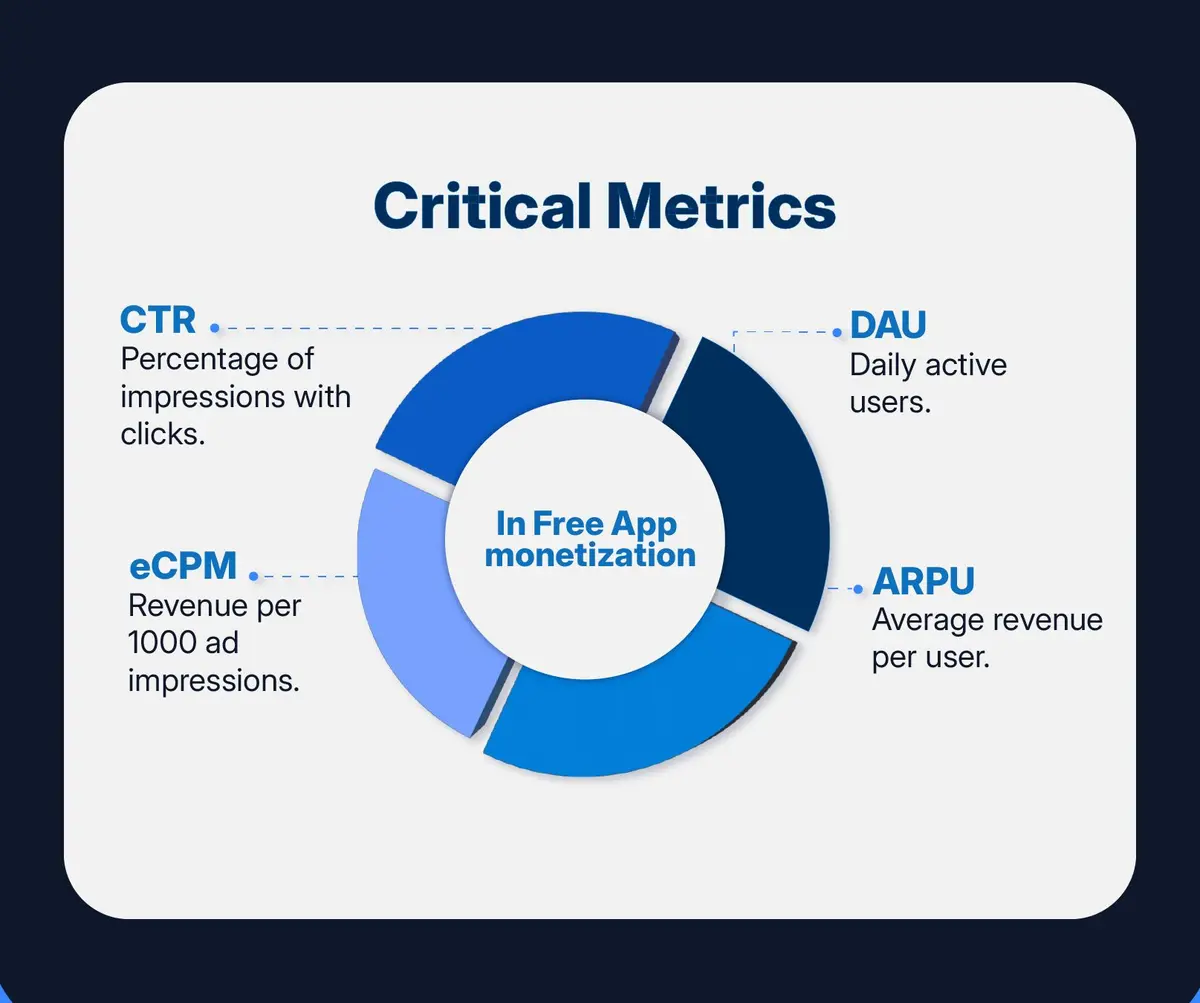
- 15. For ad-funded apps: eCPM, fill rate and revenue by ad network.
- 16. Any one-off spikes (a feature, a viral moment) flagged as one-offs.
3. Users and traffic: where installs really come from
- 17. Installs by source: organic search, browse, paid, referral, by month.
- 18. Organic share over time. Buyers discount apps that stop when ads stop.
- 19. Retention curves (D1, D7, D30, D90) for the last few cohorts.
- 20. Active users (DAU/MAU) trend, not a single screenshot.
- 21. Keyword rankings and store conversion rate for the main terms.
- 22. Ratings and reviews trend, including what people complain about.
4. Product and tech: can someone else run it?
- 23. Read access to the code repository, with a short README to build it.
- 24. A list of every third-party SDK and service, and who owns each account.
- 25. Backend and hosting: where it runs, what it costs, how to deploy.
- 26. Known bugs, crash rate and technical debt, written down honestly.
- 27. Release history and the current roadmap.
- 28. Documented processes: support, releases, ad ops, pricing tests.
- 29. How much of the business lives only in your head, and the plan to hand it over.
5. Legal and IP: does the buyer get clean ownership?
- 30. Proof you own the code: contractor agreements that assign IP to you.
- 31. Trademarks and domain names, and who they are registered to.
- 32. Licenses for fonts, music, images and any paid content inside the app.
- 33. Privacy policy, data handling and GDPR/CCPA basics.
- 34. Open-source licenses that could restrict a sale.
- 35. Any disputes, takedowns or policy warnings from Apple or Google.
6. Transfer: the part most sellers forget
- 36. Developer accounts in good standing: Apple requires at least one released version and accepted agreements on both sides.
- 37. What does not move: on Google Play, earnings reports, test groups and integration permissions stay behind.
- 38. In-app purchase products, subscriptions and server notifications mapped for the new account.
- 39. Third-party accounts (analytics, attribution, ads, payments) ready to hand over.
- 40. An escrow and transition plan: what you will support, for how long, after closing.
Our take: the two items that move the price most
From the buyer's side of the table, two items change the number more than the other 38 together. Cohorts, because a retention curve that flattens tells a buyer the revenue will still be there next year. And the founder dependency answer, because an app that only runs while you are awake is a job, not an asset. If you only have a weekend, export your cohorts and write down how the app runs without you.
What happens at transfer
The store transfer is the last step of closing, and both stores keep the app live through it. On Google Play, users, ratings, subscriptions and statistics move to the new account, but earnings reports, promotions, test groups and integration permissions do not (Google Play Help). On the App Store, the app needs at least one released version, both account holders must have accepted the latest agreements, and Xcode Cloud data has to be removed first (App Store Connect Help).
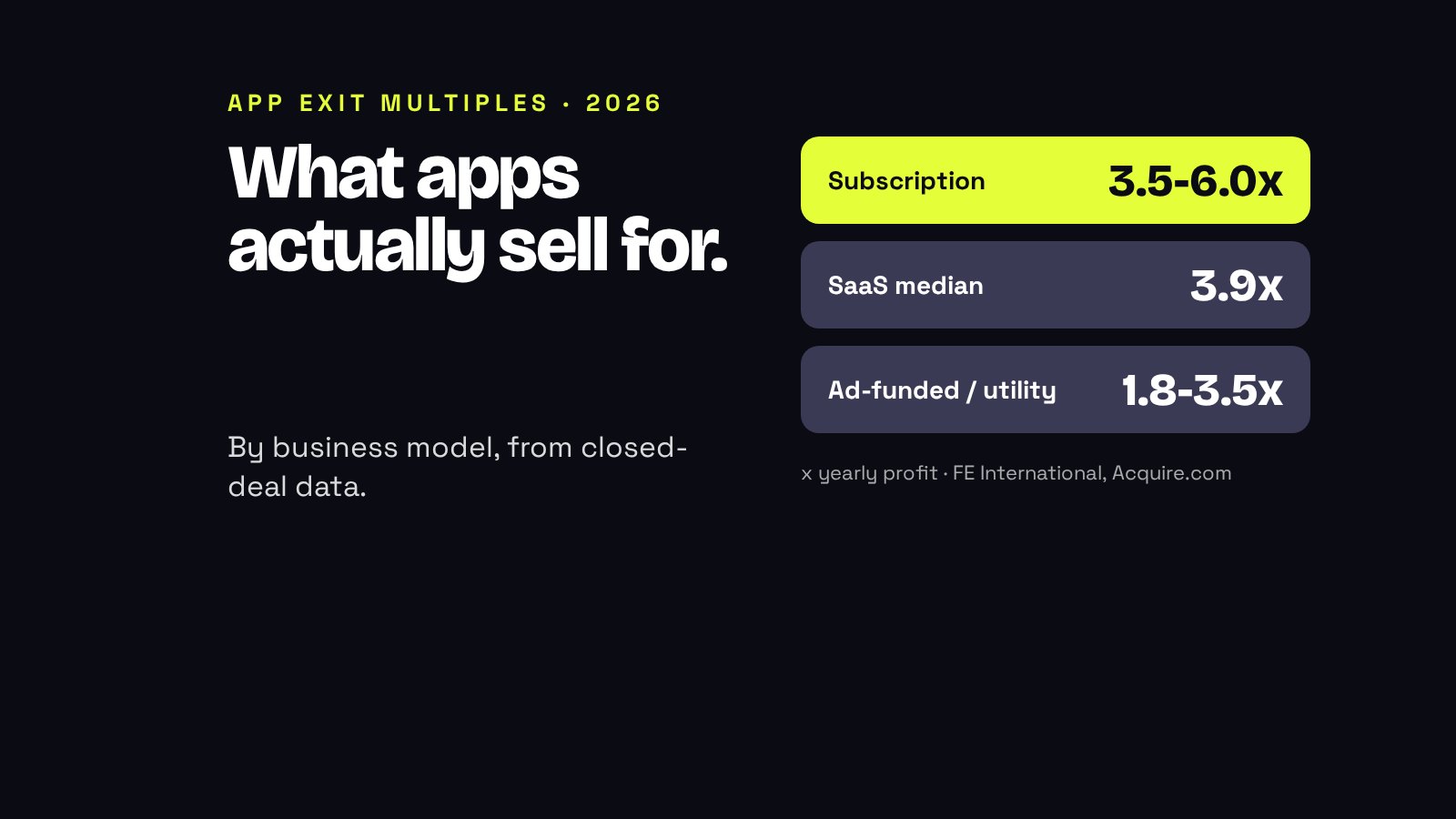
Want to know what the checklist is protecting? Run your app through our free valuation calculator, then see what apps actually sell for in 2026 and how to sell your app to a company.


Keep reading









Time for
your exit?