How Much Is a Subscription App Worth? (2026 Multiples, From an App Buyer)

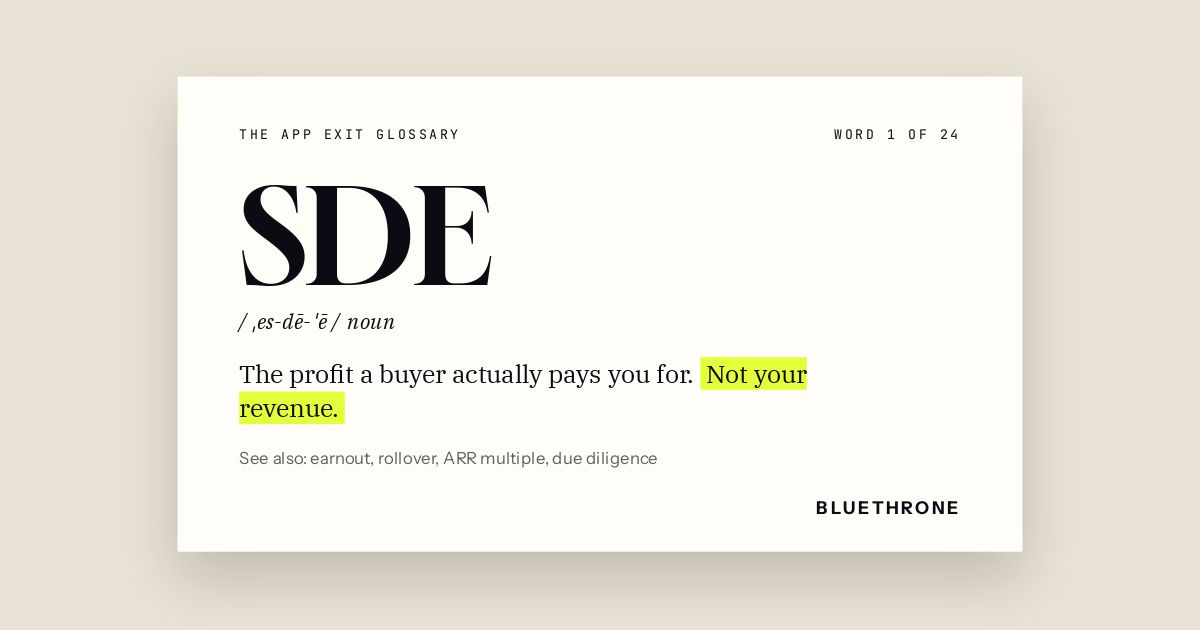
Short answer: A subscription app is usually priced as a multiple of its yearly profit, not of its revenue or downloads. Based on more than 1,500 closed tech deals, FE International puts subscription mobile apps with genuine retention at 3.5x to 6.0x adjusted earnings in 2026, against 1.8x to 3.5x for ad-funded and single-platform utility apps (FE International, 2026). Apps under about $5M are priced on SDE (profit plus the owner's pay); bigger ones on EBITDA. Where you land inside the band depends on plan mix, retention by cohort, where installs come from, and how much of the app lives in your head.
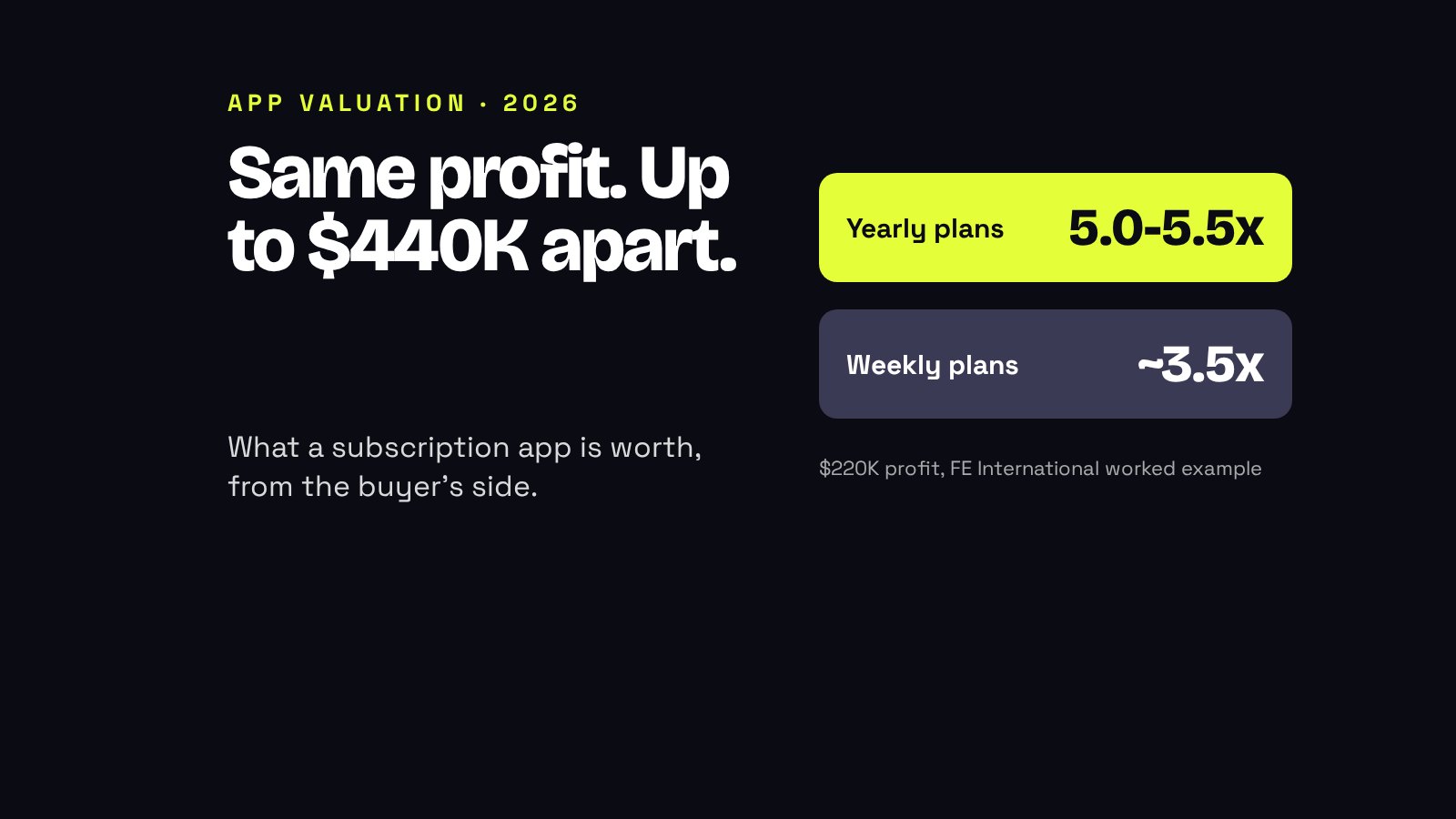
Two founders each make $220,000 a year in profit from a subscription app. One sells for about $1.2M, the other for about $770K. Same profit, a gap of $330K to $440K. This guide is about what sits in that gap, and how much of it you can still change before you sell.
The 30-second version
A subscription app is usually priced as a multiple of its yearly profit, not of its revenue or downloads. Based on more than 1,500 closed tech deals, FE International puts subscription mobile apps with genuine retention at 3.5x to 6.0x adjusted earnings in 2026, against 1.8x to 3.5x for ad-funded and single-platform utility apps (FE International, 2026). Apps under about $5M are priced on SDE (profit plus the owner's pay); bigger ones on EBITDA. Where you land inside the band depends on plan mix, retention by cohort, where installs come from, and how much of the app lives in your head.
Start with the right number: profit, not ARR
Founders usually think in MRR and ARR, because that is what the dashboard shows. Buyers of small and mid-sized apps think in profit. Under roughly $5M in value, the base is SDE: net profit with the owner's pay and one-off or personal costs added back. Above that, once a paid team runs the app, it switches to EBITDA (FE International). Revenue multiples only show up when growth is fast enough that today's profit undersells the app, in practice above about 20% a year with gross margins above 70% (FE International).
And it is always your net revenue: after Apple and Google take their cut, after refunds. If you show gross store revenue, diligence will correct it, and that correction usually costs more than the difference.
1. Take net revenue for the last 12 months, after store fees and refunds.
2. Subtract real costs hosting, support, paid acquisition, tools, a fair salary for whoever runs it.
3. Add back your own pay if you run it alone, and one-off costs (a legal bill, a rebrand).
4. Multiply by 3.5x to 6.0x. Strong renewals, organic installs and clean books push you up; weekly plans, one paid channel and messy books push you down.
Example (FE International): $600K net revenue, $220K adjusted earnings. Strong yearly-plan mix and mostly store-search installs: 5.0x-5.5x, about $1.1M-$1.2M. Same profit from weekly plans and one paid ad channel: about 3.5x, roughly $770K (source).
The five things that move your multiple
1. Plan mix. Yearly plans keep a median 28% of subscribers after one year, against 8% for monthly and 1.2% for weekly plans (FE International, citing subscription benchmarks). A weekly-plan app earns its revenue again every seven days. A yearly-plan app shows a buyer revenue they can see 12 months out. That is the single biggest reason two identical profit lines get different prices.
2. Retention that flattens. Buyers ask for monthly install cohorts with day 1, 7, 30 and 90 retention, plus subscriber retention by renewal. Flat by day 30 reads as product fit. Still dropping at day 90 reads as "the growth is ad spend" (FE International). Renewals compound: first yearly renewals land at 23% to 40% by category, second at 44% to 64%, third at 56% to 70% (FE International). A cohort that survived two renewals is worth far more per subscriber than a fresh one.
3. Conversion is not retention. Hard-paywall apps turn far more downloads into payers (a median 10.7% by day 35, against 2.1% for freemium), yet they keep about the same share of yearly subscribers after a year: 27% versus 28% (RevenueCat, 2026). A paywall change helps cash flow. It does not fix churn, and buyers know the difference.
4. Where installs come from. Concentration is the risk buyers discount most: iOS-only, one ad network above half of ad income, one social channel driving most paid installs (FE International). You don't have to be fully diversified. Proof that the app converts on a second platform or channel is often enough to move the number.
5. Involuntary churn. Nearly a third of subscription cancellations on Google Play are billing failures, not people choosing to leave (RevenueCat). Grace periods and payment retries are a few days of work, and a buyer can bank the margin they recover.
Our insight: the 2026 fee change is a valuation lever, not just a margin line
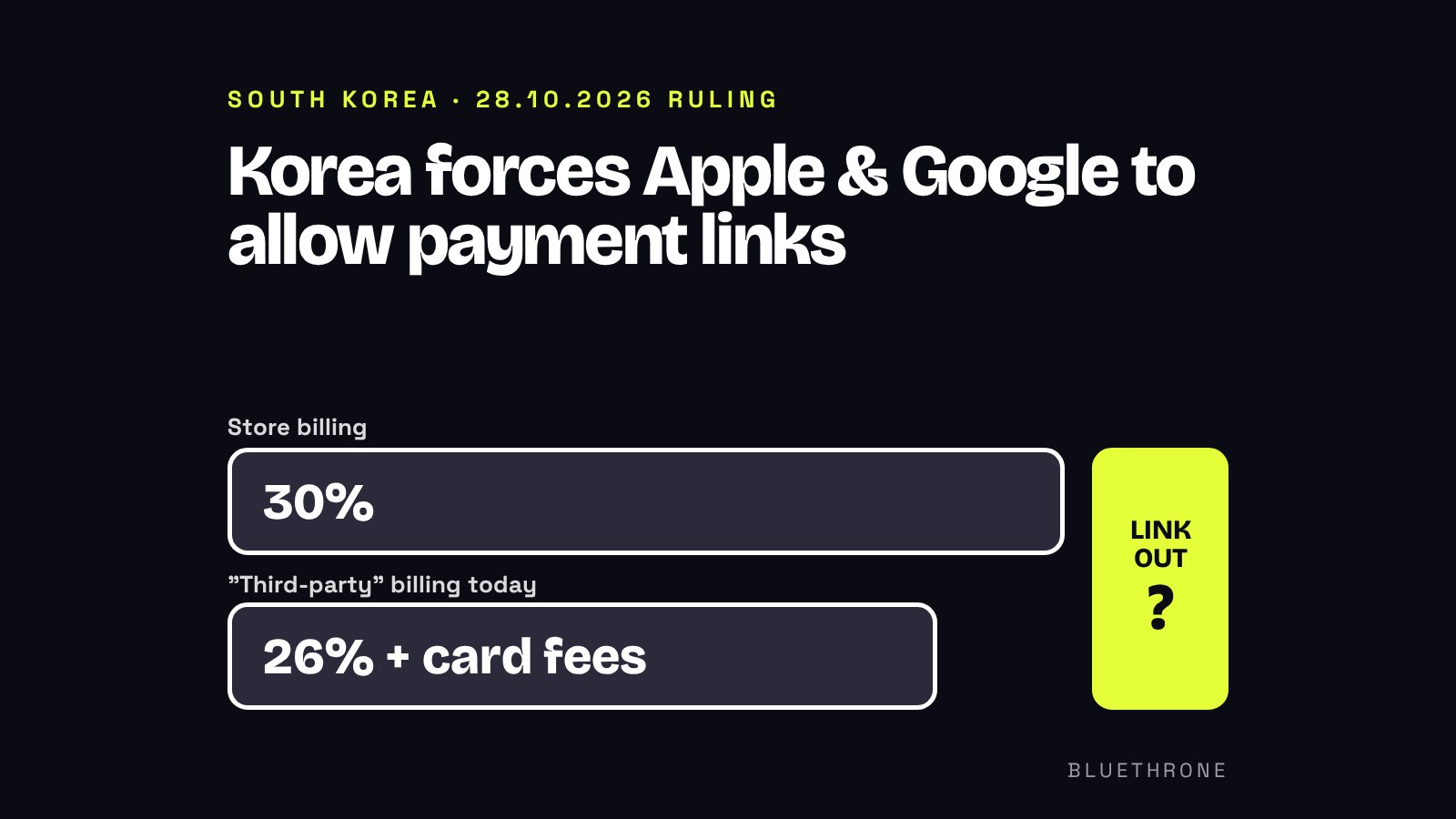
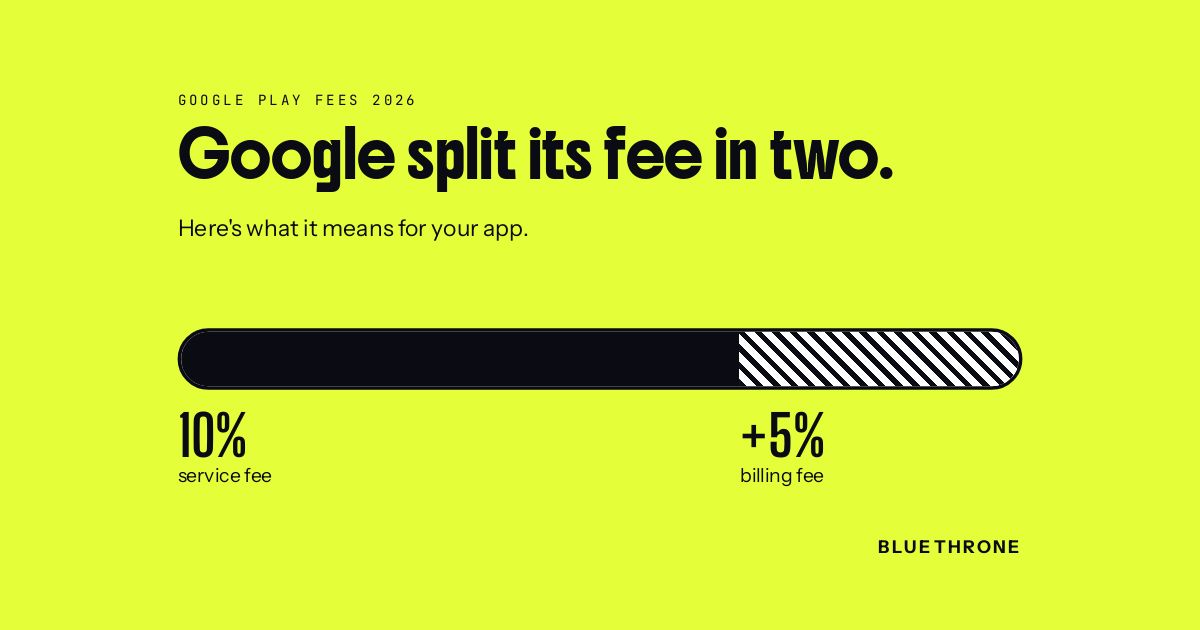
Google Play's new fee structure charges 10% on recurring subscriptions, plus a separate 5% billing fee when you use Google's billing; the new rates reached the US, UK and EEA by June 30, 2026 and roll out to the rest of the world through September 2027 (FE International). Most founders read that as "a bit more margin". Read it the way a buyer does: every extra dollar of yearly profit is multiplied.
Say your app keeps $5,000 more profit a year because more of its Android subscription revenue now falls under the lower fee.
At a 3.5x multiple that is about $17,500 more value.
At 6.0x about $30,000 more.
The point: show buyers a revenue map by store, country and fee rate, and where your margin is already improving. Forward profit they can see is profit they pay for. Plug in your own numbers; these are not market data.
What I'd do six months before selling a subscription app
1. Push yearly plans where your category allows it. Not with deep discounts right before the sale: buyers treat prepaid yearly plans as an obligation they inherit, and adjust for it at closing (FE International).
2. Export your cohorts now. Retention by month and by renewal. Six months of clean history beats any story you tell.
3. Fix Android billing retries. Cheap, and it shows up as recovered revenue.
4. Don't cut marketing to look profitable. A sudden profit jump in the last quarter buys you more questions, not a better price.
5. Clean the books. Every store payout matched to the bank, business and personal spending separated, every add-back documented.
Want a real number instead of a range from an article? Run your app through our free valuation calculator. Then read how to sell your app to a company, how to sell an iOS app in 2026, and our full app valuation guide.
FAQ
How much is a subscription app worth?
Most small and mid-sized subscription apps sell for a multiple of yearly profit. FE International, based on more than 1,500 closed tech deals, puts subscription mobile apps with genuine retention at 3.5x to 6.0x adjusted earnings in 2026.
Are subscription apps valued on ARR or on profit?
Usually on profit: SDE for apps under about $5M in value, EBITDA above that. Revenue or ARR multiples are mostly used when growth is above about 20% a year with gross margins above 70%.
Why do two apps with the same profit sell for different prices?
Because buyers price how long the profit will last: plan mix (yearly vs monthly vs weekly), retention by cohort and renewal, where installs come from, platform concentration, and how much depends on the founder.
Do yearly plans make my app worth more?
Usually yes. Yearly plans keep a median 28% of subscribers after one year, against 8% for monthly and 1.2% for weekly plans, so the buyer can see revenue further ahead. Deep discounts right before a sale do not help, because buyers adjust for prepaid revenue at closing.
Is a hard paywall better for valuation than freemium?
It improves conversion (a median 10.7% of downloads paying by day 35 vs 2.1% for freemium, per RevenueCat) but yearly retention is almost the same (27% vs 28%). It helps cash flow; it does not fix churn.
How do I find my app's value quickly?
Take net revenue for the last 12 months, subtract real costs, add back your own pay and one-off costs, and multiply by 3.5x to 6.0x depending on retention, plan mix and channel risk. Or use the free BlueThrone valuation calculator at bluethrone.io/valuation.
Written by Idan Waller, co-founder of BlueThrone. We buy and grow mobile apps, so we price subscription apps from the buyer's side every week.


Keep reading







Time for
your exit?