JibJab sold for up to $29.5M: only $15.5M was cash. Exit analysis for app founders

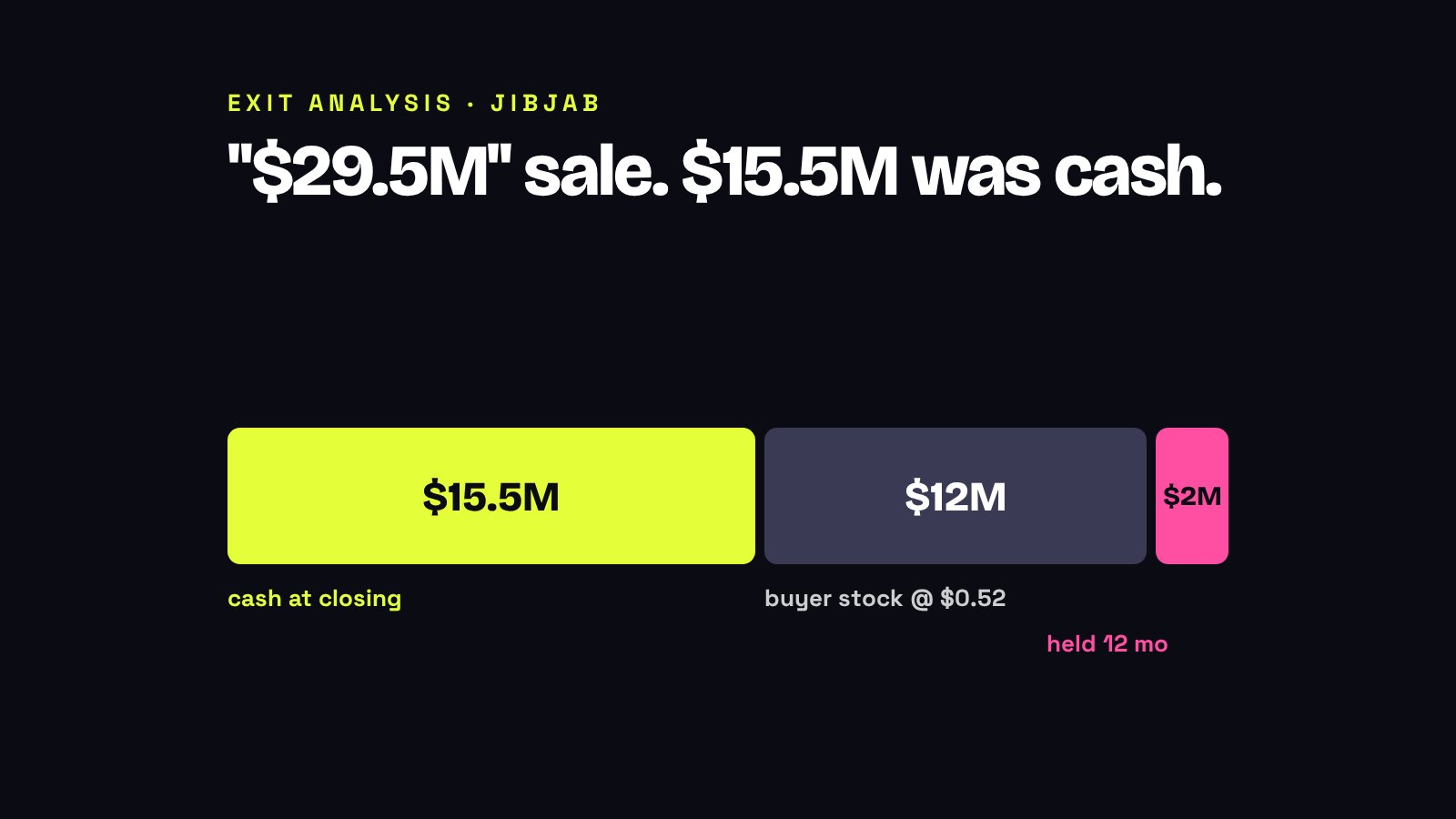
Short answer: Mode Mobile bought JibJab, the selfie e-card and video app, for up to $29.5 million. Per Mode's SEC filing dated August 20, 2026, that is $15.5M in cash at closing (subject to adjustments), 23,076,923 Mode Class AAA shares valued at $0.52 each (about $12M), and a $2M holdback paid 12 months after closing, minus any claims (SEC Form 1-U). Fast Company reported the deal on October 29, 2026; Mode's CEO says JibJab is profitable with tens of millions in annual revenue (Fast Company). The lesson for founders: judge an offer by the cash you get at closing, not the headline.
The headline says $29.5 million. The seller got $15.5 million in cash on the day. The rest is stock in a private company and money held back for a year. If you ever sell your app, this is the part of the deal to read first.
The 30-second version
Mode Mobile bought JibJab, the selfie e-card and video app, for up to $29.5 million. Per Mode's SEC filing dated August 20, 2026, that is $15.5M in cash at closing (subject to adjustments), 23,076,923 Mode Class AAA shares valued at $0.52 each (about $12M), and a $2M holdback paid 12 months after closing, minus any claims (SEC Form 1-U). Fast Company reported the deal on October 29, 2026; Mode's CEO says JibJab is profitable with tens of millions in annual revenue (Fast Company). The lesson for founders: judge an offer by the cash you get at closing, not the headline.
The founder's story: two exits, one app
JibJab was founded in 1999 by brothers Evan and Gregg Spiridellis. Its big break was the 2004 election parody "This Land", with more than 80 million views. Over the years it raised about $17.9 million (TechCrunch). In February 2019 the founders sold JibJab to private-equity firm Catapult Capital for an undisclosed price, and the company kept going as an app that turns selfies into e-cards, music videos and GIFs (TechCrunch).
So this 2026 deal is JibJab's second exit. The founders cashed out seven years ago, and this time the seller is the private-equity owner. That's a pattern we see a lot: a good consumer app often has more than one owner in its life, and each buyer prices it for what they can do with it. We haven't found an on-record comment from the Spiridellis brothers about the 2026 sale, so we won't put words in their mouths.
Read the deal like a seller
The filing spells out what "up to $29.5 million" really means (SEC Form 1-U):
- $15.5M cash at closing, adjusted dollar for dollar if working capital or cash at closing differs from the agreed targets (differences within about 5% don't count).
- $12M in Mode stock: 23,076,923 Class AAA shares at an agreed $0.52. That price was set by the parties for the deal. It is not cash, and selling private shares is up to the market and the rules, not you.
- $2M holdback: paid within five business days after 12 months, minus any pending indemnification claims.
- $4M cash left in the company: JibJab had to hold at least $4,000,000 of unrestricted cash at closing. That cash goes to the buyer along with the business.
1. What is cash at closing? Here: $15.5M, before adjustments. That is the number to compare offers on.
2. Who sets the stock price? Here it was agreed at $0.52 for the deal. Ask how and when you can sell it, and what happens if the next round prices lower.
3. What can eat the holdback? The reps and warranties you sign decide that. Narrow them, and keep the holdback small and short.
4. How much cash must I leave behind? Here: at least $4M. Cash left in the company is part of the price you pay, so count it.
Why Mode wanted JibJab
Mode isn't buying JibJab only for its profit. It plans to plug JibJab into its rewards system, EarnOS. Mode's CEO Dan Novaes described the idea:
Fast Company frames Mode as a consumer-data roll-up: it buys software businesses and gives users premium access or rewards for sharing data for AI training and consumer research (Fast Company). For a founder, that matters: a buyer like this pays for users and engagement as much as for profit, which is why it can offer stock. Its upside depends on what it builds with your users.
The buyer's math
Mode's CEO says JibJab has "tens of millions of dollars in annual revenue" and is profitable (Fast Company). A later Mode SEC filing (an amended Regulation A offering circular, Form 1-A POS) reportedly puts it lower: about $18 million a year (Form 1-A POS). We saw that figure quoted from the filing but couldn't verify it in the original ourselves, so treat it as reported, not confirmed. Either way, the full $29.5M is somewhere around 1x to 1.6x revenue (1.6x if the $18M is right), and the cash at closing is less than 1x. For a mature, profitable subscription app, that's a reminder that age and slow growth weigh on the multiple, whatever the brand. Our take: a 27-year-old brand with a loyal paying base is exactly the kind of app that sells on profit, not on hype.
What I'd do in the seller's shoes
- Ask every buyer for cash at closing first, then the rest.
- If part is paid in stock, get the share price, the selling rules and the last financing price in writing.
- Keep holdbacks under about 10% and 12 months, and tie them to specific claims.
- Agree on the cash and working-capital targets before signing, so adjustments don't eat your price.
- Know your number before the first call: check what your app is worth, and read how we value an app.
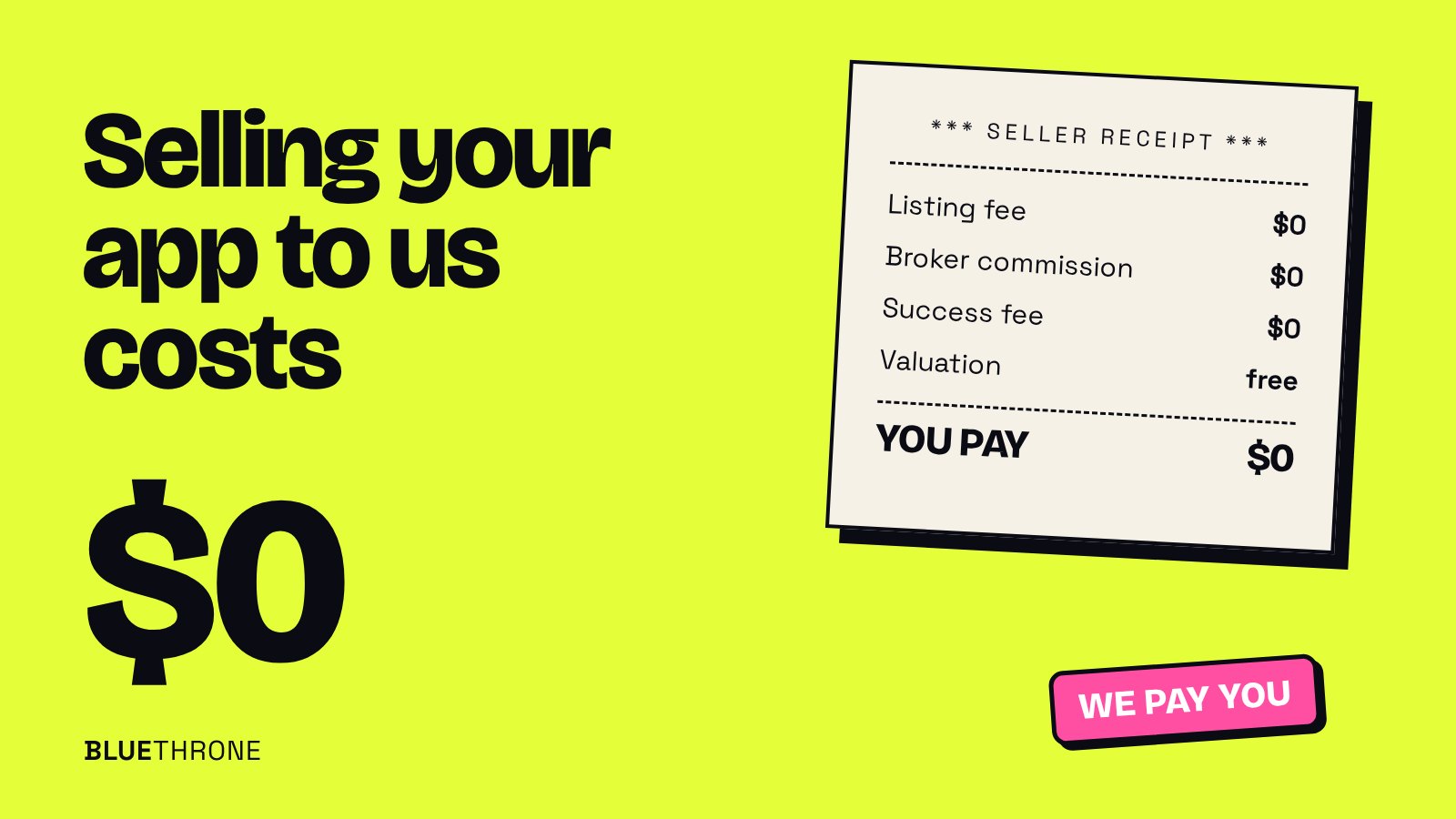
Selling? Read how to sell your app to a company. And for the record, selling to BlueThrone costs you $0 in fees.
FAQ
Who bought JibJab and for how much?
Mode Mobile acquired JibJab (through JibJab Catapult) for up to $29.5 million, per Mode's SEC Form 1-U dated August 20, 2026. Fast Company reported the deal on October 29, 2026.
How was the JibJab deal paid?
$15.5 million in cash at closing (subject to working-capital and cash adjustments), 23,076,923 Mode Class AAA shares valued at $0.52 each (about $12 million), and a $2 million indemnification holdback paid 12 months after closing, net of claims.
Who founded JibJab?
Brothers Evan and Gregg Spiridellis founded JibJab in 1999. They sold it to private-equity firm Catapult Capital in February 2019 for an undisclosed price.
Why did Mode buy JibJab?
Mode plans to integrate JibJab with its EarnOS rewards system, offering users premium access in exchange for actions such as sharing data, according to Mode's CEO Dan Novaes.
What should a founder learn from the JibJab deal?
Compare offers on cash at closing, not the headline price. Stock, holdbacks, adjustments and cash you must leave in the company all change what you actually take home.
Written by Idan Waller, co-founder of BlueThrone. We buy and grow mobile apps, so we read every deal from the founder's side of the table.


Keep reading







Time for
your exit?